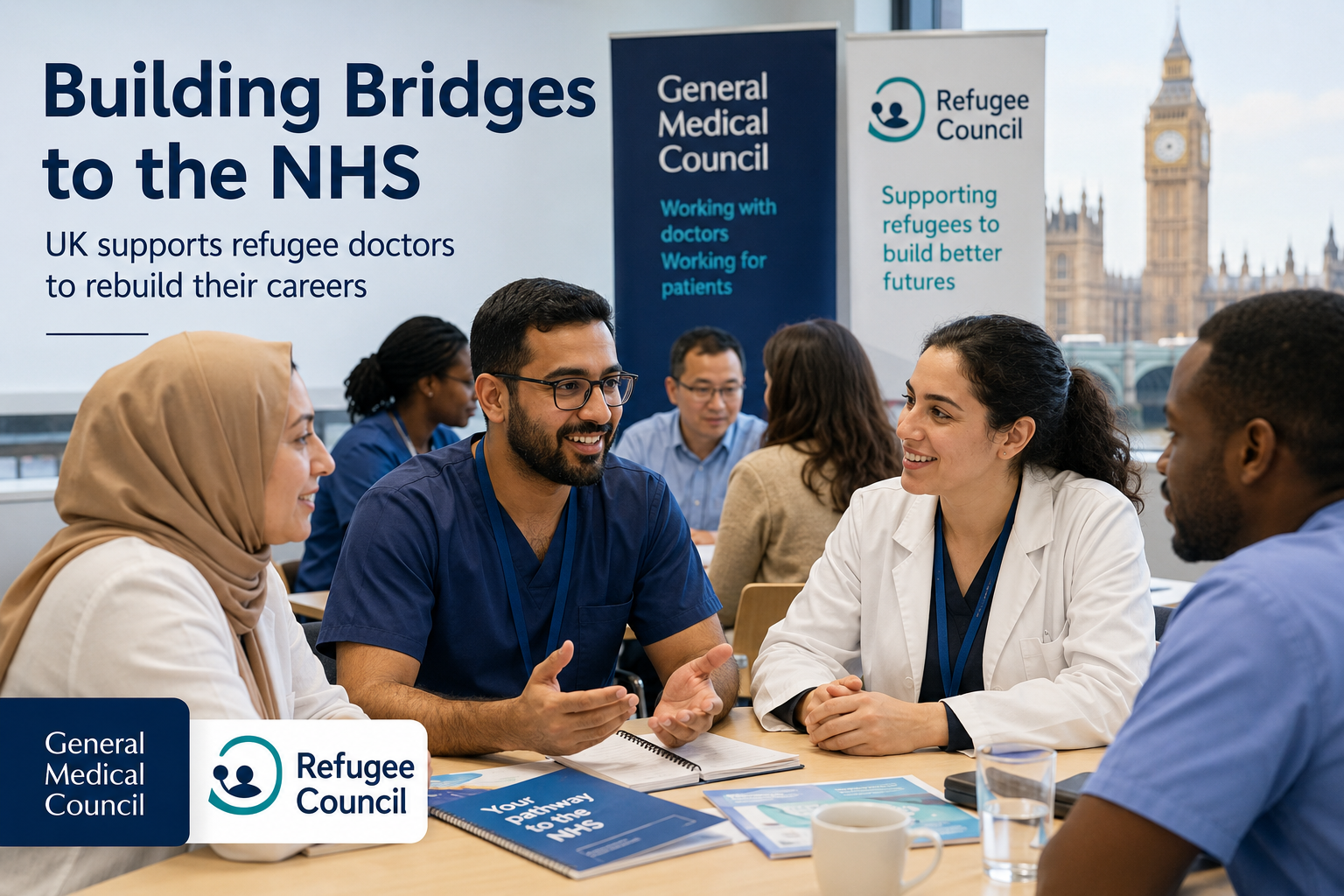
Doctors forced to flee war, conflict and political persecution are being given new opportunities to rebuild their medical careers in the United Kingdom through a joint initiative led by the General Medical Council (GMC) and the Refugee Council.
The “Building Bridges” event, held in London on 25 April, brought together refugee doctors from different countries and introduced them to the pathways required to return to medical practice within the NHS.
The programme covered topics including GMC registration procedures, gaining clinical experience, preparing for PLAB examinations, adapting to NHS workplace culture and improving English language skills.
NHS workforce shortages drive demand
The event comes at a time when the UK healthcare system continues to face growing staffing shortages, particularly across hospitals and primary care services.
Healthcare experts say refugee doctors are increasingly viewed as an important resource for the NHS due to their professional experience, specialist knowledge and relatively low retraining costs.
According to Refugee Council figures, helping a refugee doctor return to practice costs only a fraction of the amount required to train a new doctor from the beginning.
Lost documents create additional barriers
Like all international doctors seeking to work in the UK, refugee medics must prove their English proficiency and clinical competence before joining the UK medical register.
However, refugee doctors often face additional challenges, including missing diplomas, destroyed records and difficulties obtaining official documentation from conflict zones.
The GMC said it continues to provide tailored support for refugee doctors throughout the process, including guidance on qualification verification and financial assistance for certain registration and examination fees.
“Refugee doctors bring huge value to the NHS”
Kim Tolley, Regional Liaison Adviser at the GMC, said refugee doctors represent an important opportunity for the UK healthcare system.
“Refugee doctors bring vital clinical expertise, resilience and adaptability to the NHS,” Tolley said.
“But they also face unique challenges when trying to rebuild their futures in the UK. Through initiatives like Building Bridges, we want to help remove those barriers so these experienced professionals can contribute their skills to patient care.”
Long-running support programme
The Building Bridges programme, operated by the Refugee Council, supports not only doctors but also nurses, dentists, pharmacists and other healthcare professionals.
The initiative has been running since 2009 and has helped hundreds of refugee healthcare workers move back into professional roles within the NHS.
The programme has provided support to medical professionals arriving from conflict-affected countries including Sudan, Afghanistan, Ukraine and Yemen.
Fahira Mulamehic, Project Manager for Integration and Employment at the Refugee Council, said many highly skilled clinicians struggle to return to work after being displaced by war.
“This programme helps refugee healthcare professionals improve their English, prepare for professional exams and rebuild both their careers and their lives,” she said.
“I no longer feel alone”
At the end of the event, one refugee doctor, who asked to remain anonymous, described the emotional impact of the gathering.
“When you are in a room with people going through the same experience, and when you see there are people supporting you, it no longer feels so isolating,” the doctor said.
“I’m leaving today feeling inspired and with renewed energy.”
Find out more about the Building Bridges initiative.
UK opens NHS pathway for refugee doctors