For years, the EHIC (European Health Insurance Card) was one of the most important things British travelers packed before heading to Europe. After Brexit, though, things changed — and for many people, there’s still a lot of confusion about how the system actually works.
Surprisingly, some travelers still believe these cards provide completely free healthcare anywhere in the world.
Unfortunately, that’s not quite the case.
So What Do EHIC and GHIC Actually Cover?
First things first:
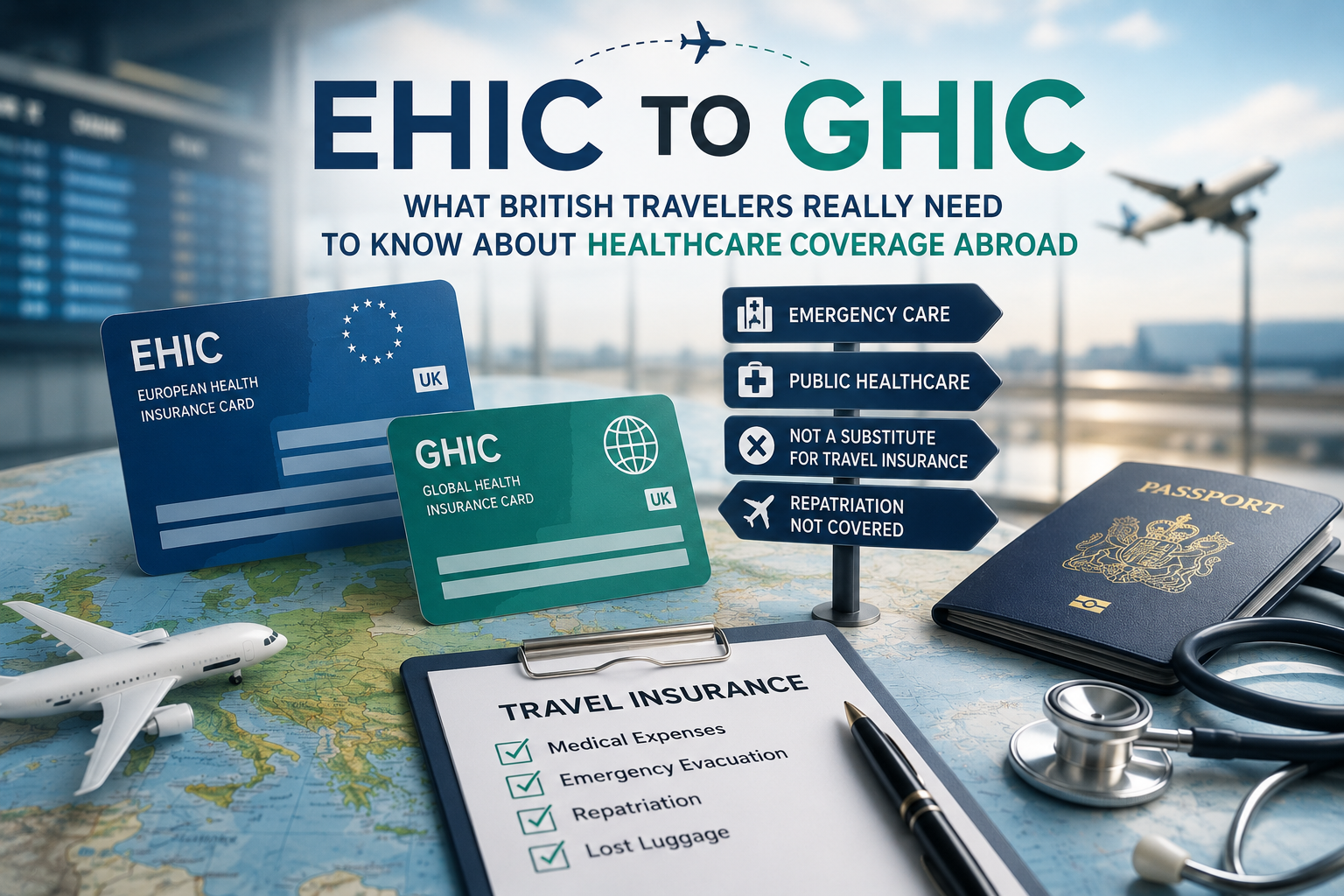
EHIC — and its newer replacement GHIC (Global Health Insurance Card) — is not a substitute for travel insurance.
What these cards do provide is access to medically necessary healthcare within participating European countries, either for free or at a reduced cost. That includes things like emergency treatment during a holiday, care related to chronic conditions, or unexpected medical issues that arise while traveling.
But there’s a catch.
Private hospitals, private ambulances, medical evacuation flights, and transportation back to the UK are usually not covered.
And honestly, this is where many travelers get caught off guard.
The “I Thought I Was Covered” Problem
A lot of British tourists still travel with only a GHIC or EHIC card and assume that’s enough protection.
But if something serious happens — like a skiing accident or a medical emergency requiring repatriation — costs can quickly climb into the thousands.
For example, treatment for a broken leg in Austria combined with a nurse-assisted return flight to the UK can reportedly cost around £5,000.
And no… GHIC does not pay for that.
That’s why travel experts continue repeating the same advice over and over again:
GHIC is helpful, but it should never replace proper travel insurance.
What Changed After Brexit?
After Brexit, EHIC wasn’t completely eliminated, but most new applications now go through the GHIC system instead.
Older EHIC cards can still be used until they expire. After that, travelers can apply for a GHIC card free of charge.
What’s interesting is that many people still don’t even realize GHIC exists. Especially among older travelers, there’s still a belief that the old EHIC system simply continues unchanged.
And honestly, the name itself adds to the confusion.
“Global Health Insurance Card” sounds like something that works worldwide. But in reality, the coverage is still mostly limited to Europe.
So yes — the name sounds much bigger than the actual coverage.
Which Countries Accept GHIC?
The card is mainly valid within countries in the European Economic Area, along with a few additional participating countries like Switzerland under certain conditions.
But here’s another important detail people often miss:
Healthcare systems work differently in every country.
In some places, public healthcare may be fully covered. In others, patients might still need to pay partial fees or upfront costs.
So having a GHIC card does not automatically mean everything will be free.
Why This Matters for Medical Tourism
This topic has also become increasingly important in the medical tourism industry.
A lot of British patients traveling abroad — especially to countries like Türkiye — ask whether GHIC or EHIC covers their treatment overseas.
The short answer? Usually no.
Planned procedures such as cosmetic surgery, dental implants, hair transplantation, or elective medical treatments are generally not covered under GHIC.
So if someone travels to Türkiye for aesthetic surgery or dental work, they are typically paying privately or using separate medical insurance.
That’s a really important distinction many patients don’t fully understand before traveling.
Fake Application Websites Are Becoming a Problem
Another issue that’s grown recently is fake GHIC application websites.
The card itself is completely free through the official NHS system, but some third-party websites charge unnecessary fees to “assist” with the process.
Unfortunately, many travelers — especially older users — end up paying for something that should cost absolutely nothing.
It’s a reminder of how important digital awareness has become, especially in healthcare and travel-related services.
Final Thoughts
At first glance, the switch from EHIC to GHIC may seem like a simple name change. But in reality, it reflects a much larger shift in how healthcare access works for British travelers after Brexit.
GHIC absolutely provides valuable support and can make a huge difference during emergencies abroad. But it also has clear limitations.
It does not replace travel insurance.
It does not guarantee free treatment everywhere.
And it definitely does not cover every healthcare-related expense a traveler might face.
For people traveling specifically for medical tourism, understanding those limits is even more important.
Because when it comes to healthcare abroad, assuming you’re covered can become a very expensive mistake.