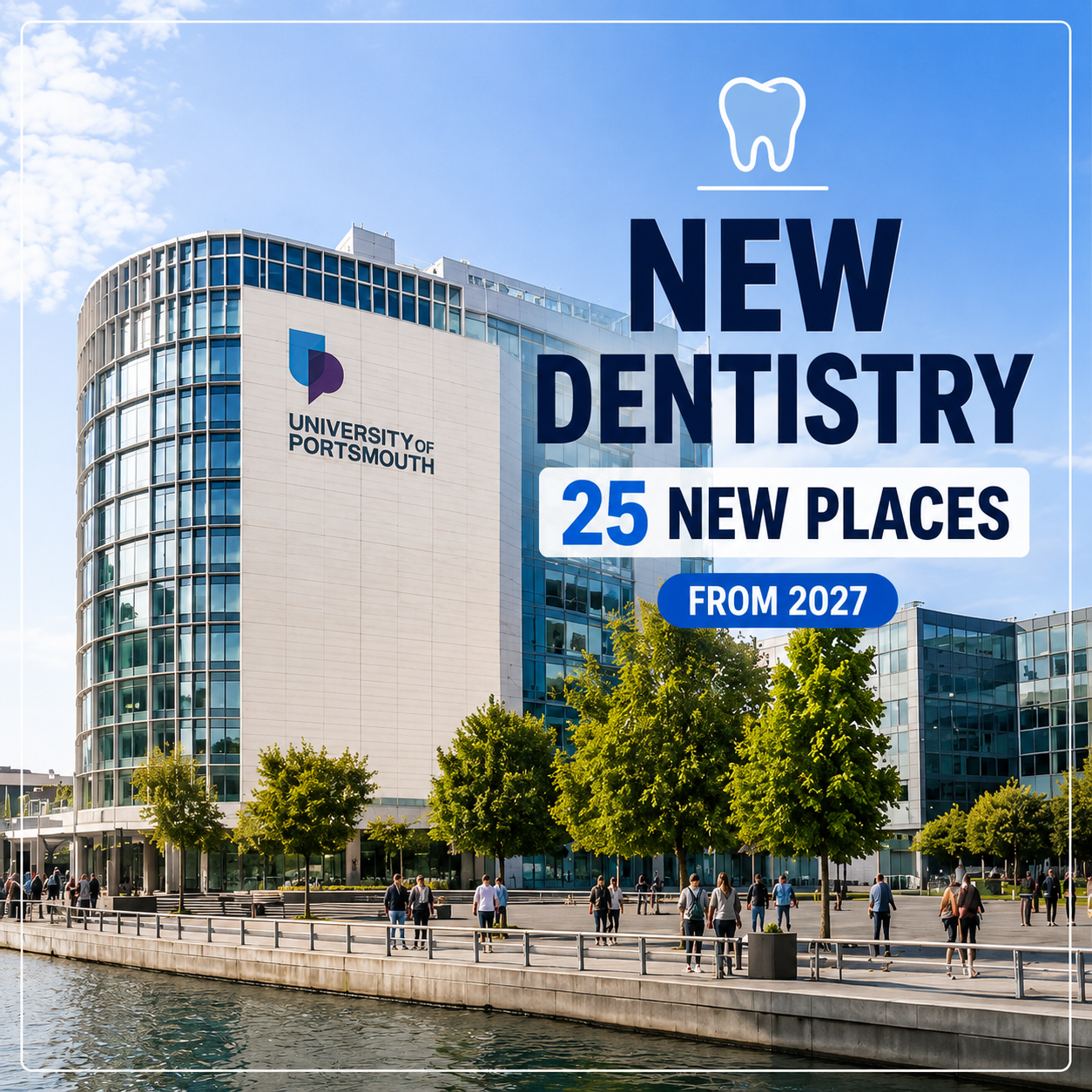
The UK government has announced the creation of 50 additional undergraduate dental school places in an effort to address the country’s ongoing shortage of dentists. The new places have been allocated equally between the University of Portsmouth and the University of East Anglia, both of which are expected to launch dentistry programs for the first time in 2027.
While the move has been welcomed as a positive step, dental leaders argue that it is unlikely to have a significant impact on patient access to care unless broader reforms are implemented within the National Health Service (NHS).
According to the British Dental Association (BDA), the additional places represent only a small increase in the overall dental workforce pipeline and are unlikely to substantially reduce the number of communities struggling to access NHS dental services.
The association points to previous examples where new dental schools did not lead to major improvements in local access to care. As a result, experts believe that increasing student numbers alone will not resolve the structural challenges facing NHS dentistry.
BDA Chair Eddie Crouch stated that while new dental schools are a step in the right direction, they are “no silver bullet” for addressing so-called dental deserts—areas where access to NHS dental care remains severely limited.
Industry representatives argue that the core issue is not simply training more dentists but retaining them within the NHS. Many newly qualified dentists are choosing alternative career paths or private practice due to concerns about funding, working conditions, and the current NHS dental contract.
For this reason, professional organizations continue to call for comprehensive reform of NHS dentistry, alongside sustainable long-term funding. Without meaningful changes to the system, experts warn that expanding dental education alone is unlikely to reverse the ongoing access crisis.
The announcement highlights a broader debate within UK healthcare: whether increasing the number of dental graduates can improve access to care, or whether fundamental reform of NHS dentistry is required before meaningful progress can be achieved.
New Dental School Places in England Unlikely to Solve Access Crisis Without NHS Reform, Experts Say