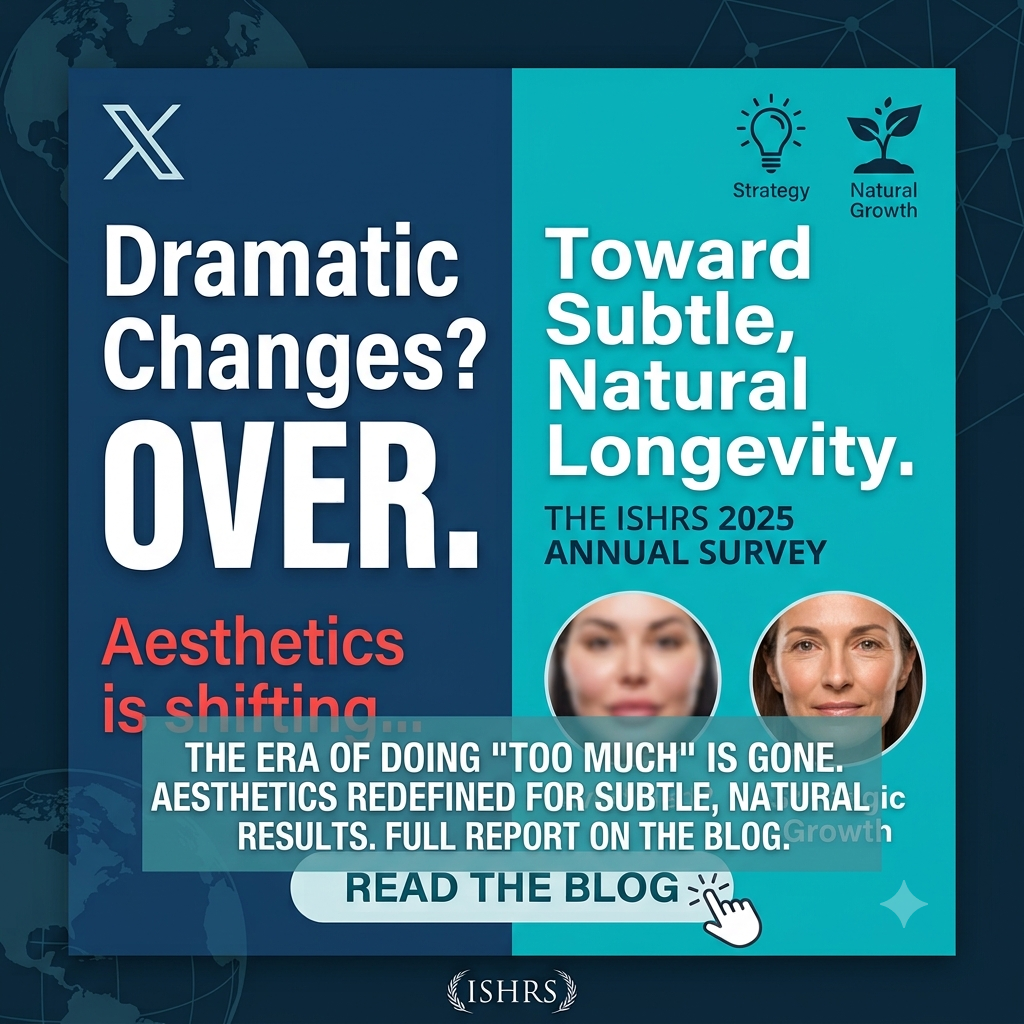
The landscape of aesthetic medicine is undergoing a profound transformation. According to the AAFPRS (American Academy of Facial Plastic and Reconstructive Surgery) 2025 Annual Survey, we are witnessing a clear departure from dramatic, overdone results in favor of early, strategic, and highly personalized interventions.
Conducted in December 2025 by ACUPOLL Precision Research, Inc. among a select group of the organization’s 2,500+ specialized members, this report provides a comprehensive look at the trends defining modern facial plastic surgery.
Here are the key takeaways from this pivotal research:
A Surge in Demand and the “Natural” Preference
The industry is experiencing one of its strongest growth phases in years, with a projected 19 percent increase in facial procedures nationwide, totaling an estimated 1.6 million treatments. Notably, patients are no longer asking for drastic changes; rather, they are prioritizing natural-looking outcomes and long-term facial health.
- The Dominance of Non-Invasive Care: Minimal invasive treatments remain the most popular choice, accounting for an impressive 80 percent of all procedures.
- The Top Procedures: Rhinoplasty, facelifts, and blepharoplasty (eye lifts) continue to hold their positions as the cornerstone surgical procedures, maintaining consistency with trends observed over the past six years.
Breaking Gender Norms: A More Balanced Aesthetic
Aesthetics are no longer defined by traditional gender roles. As Dr. Anthony Brissett, President of the AAFPRS, notes, the divide is disappearing.
- Broadening Interest: One in four surgeons reports that procedures such as otoplasty, chin augmentation, and facial implants are now performed almost equally between men and women.
- Hair Restoration Trends: While hair transplantation remains more common in men, the demographic is shifting. The proportion of practices reporting more female than male hair restoration patients has risen to 17 percent, and overall, surgeons performed roughly twice as many hair restoration treatments in 2025 compared to 2024.
Age as a Strategy: Prevention Over Correction
One of the most meaningful shifts is when patients choose to act. Aesthetics are increasingly viewed as a long-term maintenance strategy rather than a late-stage repair.
- Earlier Intervention: 57 percent of surgeons report an increase in patients under 30 seeking preventative treatments to preserve facial structure.
- Intentional Aging: Patients are choosing subtle, preventative approaches designed to promote graceful aging rather than reacting to advanced signs of aging later in life.
The Impact of Modern Lifestyle and GLP-1 Medications
The rise of weight-loss medications like semaglutide has “literally altered the face of aesthetics.”.
- The “Ozempic Face” Phenomenon: 67 percent of facial plastic surgeons report an increase in patients seeking remedies for rapid weight-loss effects, such as hollowed cheeks and increased skin laxity—a 45 percent increase from the previous year.
- Volume Restoration: This has driven a 50 percent growth in fat grafting procedures for the second consecutive year as patients look to restore balance and softness to their features.
Midlife Autonomy: The Menopause Trend
Menopause is no longer a taboo subject in the clinic. 45 percent of surgeons report that women are explicitly citing menopause or perimenopause as a key driver for seeking care—up significantly from 28 percent just last year. Whether it is eyelid procedures to look less tired (reported by 66% of members) or treatments to remain competitive in the workforce, patients are viewing these procedures as a way to reclaim autonomy and confidence during a major hormonal transition.
Conclusion: Precision Over Automation
In an era of social media scrutiny, the primary motivator for today’s patient is the fear of looking “unnatural” or “done.”. This shift places a premium on specialized expertise. While technology and virtual consultations are on the rise, the industry remains firm: innovation is a tool, but experience, precision, and specialized training remain the absolute foundation of exceptional care.